Blessed Virgin Mary –Sojourn with Savior – Saga, Story & Shunoyo – 2
The Oriental Orthodox Churches especially Coptic, has a strong tradition of the flight of the holy family consisting of Joseph, Virgin Mariam, Infant Jesus (& Salome – midwife) from place to place in Egypt seeking refuge from Roman soldiers pursuing them from Palestine. Egypt is where Israel, once took refuge. Joseph of Old Testament saved God’s People (Israel) by bringing them to Egypt (Gen. 39 – 47). When Israel was a child, I loved him, and out of Egypt I called My Son. (Hos. 11: 1). Now another Joseph finds safety for the Savior in Egypt (Matt 2: 13 -15). ‘Out of Egypt, I called My Son’ (Matt. 2: 15). True Son of God coming out of Egypt. The cruelty of Herod the Great (Matt 2: 16); is prefigured by Pharoah, killing of Newborn boys of Jews (Ex. 1: 16, 22)
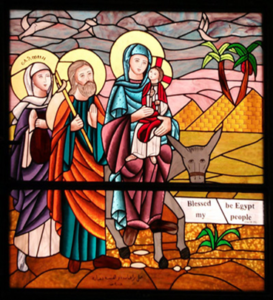
“Tradition records some sites in Lower and Upper Egypt upon which Churches were built to commemorate their visit. – 3 monasteries of Wadi El Natrun, Mataria & of Al Moharraq. The Roman Fortress of Old Cairo, embraces within its walls the ancient Church of ‘Abu Sarga’ (St. Sergius) built on a crypt in which our Lord dwelt during His sojourn in the ancient Jewish quarter in Babylon. The earlier Church of the crypt was built in the Apostolic age. The tradition which brings Joseph and Mary to settle there during the greater part of their stay in Egypt.
Blessed Virgin Mary – The Holy Family In Egypt
We can be sure of one thing that the Holy Family stayed there till the death of Herod when angel asked St. Joseph to return to Palestine.” Arise, take the young child and His mother go to the land of Israel (Matt. 2: 19; Lk. 2: 39). In the Coptic Church tradition, and as History bears it out. Along this route to-day the faithful maintain stations or historical shrines that have been set up to commemorate this holy visit of the Holy Family. There are about fourteen stations in all and about half of them are located in and around Cairo.
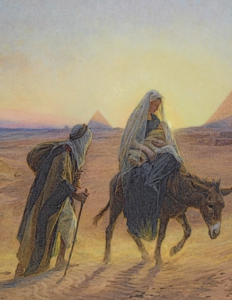
The Coptic Church celebrate the “Feast of the Entry of our Lord into the land of Egypt on the 24th of the Coptic month of Bashons (June 1) with the faithful expressing their gladness in these words: Be glad and rejoice, O Egypt, and her sons and all her borders for there hath come to thee the Lover of man, He who is before the ages.” “It is possible that Our Lady with the infant Jesus in her arms, travelled riding an ass while Joseph walked by the side. The sight is not unfamiliar with countries of the Middle East even in our day. The traditional stations of their progress seem to confirm this assumption
The First location was recognised as where the Holy Family took shelter under a tree, which is said to have survived until 1850. The Second better-known place, long frequented by medieval pilgrims and modern tourists, is the village of Matariya where the group rested beneath a sycamore tree in the neighborhood of an eighteenth dynasty obelisk still standing on the same spot. According to tradition, that sycamore tree has been preserved by pious generations, possibly through transplanting, until our own time, and the existing one could be traced to the year 1672. Under the weight of great age, it collapsed in 1906, though green shoots still keep sprouting from its venerable branches.
“The third location is commemorated by the Copts in the Church of the Blessed Virgin and a nunnery at Haret Zwayla in Cairo. But the most attractive land-mark on the way further south is probably the cave or perhaps a small subterranean temple within the precincts of Babylon where the Family sojourned for a little time. Over this fourth place, the Copts constructed the fourth century church of Abu Sarga (St. Sergius) while the underground structure was carefully preserved as special chapel with an altar and a wall niche where the infant Jesus was probably laid to Sleep. “Afterwards the stations of the Holy Family entered a Jewish Synagogue on the Nile, south of Old Cairo, the Copts again built another of Our Lady’s Church at Maadi.
It was here that the travelers crossed the Nile and penetrated Upper Egypt as far as Meir and Qusiya in the province of Asyut. Again, they hid in a cave for approximately six months and it was on that site that the pious natives later established our Monastery of Holy Virgin popularly known as Dair al-Muharraq. “It is difficult to unravel the legend from the reality, but the Coptic susceptibility to local tradition has survived with the blessings of the hierarchy.” A brief account of the Holy Family’s sojourn in Egypt is also available in a recent publication, “The Apparition of Virgin Mary at Zeitoun (1985)”. “On the 1st June (24th Bashon) the Church celebrates the anniversary of the Holy Family’s coming to Egypt. It is known that the Holy Family arrived at El Ferma at the North Eastern Border of Egypt (now the place is named Port Fouad). God has blessed our land and all the old Egyptian idols fell to pieces to realize the Book’s statement that: ‘In that day there will be an altar to the Lord in the midst of the land of Egypt, and a pillar to the Lord at its border’ (Is. 19: 19).
“The Virgin Mary sat in the shade of a big tree, Joseph touched the ground with a rod of iron, and fresh water sprang out of the spot. It is said that a man named Kalloum wondered at what he saw. He invited the Holy Family to his house where he used to pray to an idol. That idol fell and was broken into pieces. So, the priests demanded the death of Jesus. The Holy Family went over to Belbeis & to Menyat Genah (near present town Sammanoud). There, Christ caused a spring of water to appear. A Church was built there. It was called Beekha Isous i.e. Christ’s heel; now known as Monastery of El Maghtas. “The Holy Family then went over to El Natroun Valley. So, God blessed the place and filled it with monasteries and people them with monks. There, it is said, the Holy Family was met by two thieves. The first was deeply affected by the light and holiness emanating from the baby Christ’s face. So, he persuaded his companion to restore what they had plundered. The Virgin prayed that he might be granted the blessing of repentance. It is the same thief on Christ’s right, that he had been touched by Grace, so he cried out on the throne, ‘Lord remember me when thou comes into Thy kingdom.’
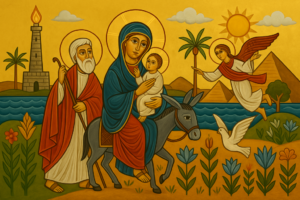
The Holy Family then moved to Ein Shams and El Matterya. Joseph had a stick. Christ planted it: Spring of water came out; it grew into a tree. El Matterya tree still lives up to the present day, over 2000 years. The Holy family passed by site occupied now by the Church Abou Serga in Ancient Cairo. “Then the Holy Family moved on to Upper Egypt (near Samalout) passing through El Asmouneen, and Mount Drinka (in Assyout). El Moharik monastery has an ancient Church on the site of the cave in which the Holy Family stayed.” William Farid Basili of Cairo in his book, “The Flight to Egypt,” has tried to reconstruct the route the Holy Family narrates in detail the places where they halted, people they met, their unusual experiences, dangers, escapes etc. A few legendary stories of experiences which are known to-day with reference to current geographical identifications and interesting and profitable to know are rendered below. During the early part of their journey, the Holy Family reached the town of Tel Basta, in this town, the temple where the Goddess Bastit (the cat) was worshipped. The Holy Family rested under the shade of a big tree, till the night to resume their travel. There they were met by a peasant by name Kloum who invited them to his home. The Holy Family accordingly went to his house.
The Holy Family accordingly went to his house. There the infant Jesus cured Sara, the wife of Kloum who was sick, since many years. The next day Virgin Mariam, infant Jesus and Sara went to see the Temple. As soon as Virgin Mariam with the child Jesus entered the temple, all the huge granite statues fell down, became a mass of ruined blocks. Soon the identity of infant Jesus was known and the authorities planned to arrest the child and others. Holy Family left the city by night.
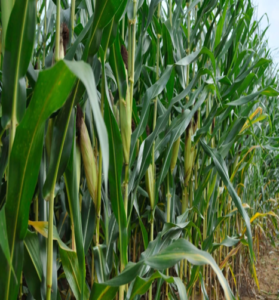
Protected in the Field of Corn. The Holy Family fleeing from Tel Basta was followed by soldiers. There was no possible place of shelter, passed through the field of corn. Almost as the soldiers came near, the Holy Family entered into the field of grown corn and hid themselves from being seen and caught. The stalks of corn two meters high gave way enough for them to pass, then closed behind them without leaving slightest trace. The onlooking farmers were surprised. The soldiers soon arrived. They questioned the farmers, who showed the flawless standing corn. Convinced that nobody had passed through the field, they rode off. Later, the Holy Family came out of the hiding, continued their journey.
The Holy Family during the course of the flight from the pursuing soldiers of Herod, “arrived at the ancient city of ON (Heliopolis – ancient Egyptian religious Centre) known at that time as Leontopolis – a Jewish village of about 2000 inhabitants, Mataria of to-day”, outside the village, they took shelter under a Sycamore tree. Coptic Church tradition holds many legends linking this tree with site to the Holy Family. One story is that when Joseph looked around for source of drinking water in vain, infant Jesus hit a place with a stick.
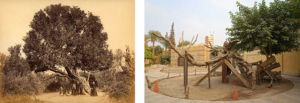
Joseph made a pit near the tree and instantly fresh clear water gushed out. Another traditional story is that Jesus took the staff of Joseph. Joseph broke it into pieces, planted them with His hand & water came from the gushing pit. These pieces grew into what later came to be called Balsam shrubs. The oil extracted from them was used for anointing kings and priests, for baptism etc. It is said that the last Balsam tree died in 1615. The interesting legend about the motherly protection provided by the Sycamore tree. “While the Holy Family were reposing under the shade of the Sycamore tree. Salome noticed the soldiers on horsebacks galloping towards them at a distance.
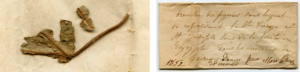
A branch from the fig tree around Cairo under which rested the Virgin Mary and Saint Joseph during their flight to Egypt
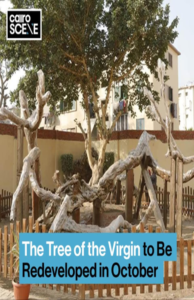
The legend says that the angel of the Lord appeared and told Mary to climb up the tree with the Divine Child and a spider spun a great web over Mary to screen their hiding place from the eyes of the soldiers. Another tradition says the tree was miraculously opened to conceal Mary and the Divine Child inside it. When the soldiers arrived, they found only a man and a lady whom they took for residents of the area and left the place…” The Sycamore tree is a witness to all these anecdotes known as the Virgin’s Tree. As late as 1968, it was existing but a completely dead trunk. There is inside the Church of the Holy Family nearby, another offshoot of the Holy Tree standing alive and many faithful pilgrims pay a visit for blessing.“In 1869 Khedive Ismail presented the venerable tree to the Empress Eugine on the occasion of the opening of the Suez Canal. The gift was graciously accepted by the Empress who, however, with tact and discretion preferred to allow the tree remain in its original place. The tree fell on June 14th, 1909, remnants still maintained
Church of Virgin Mariam at Haret Zewaila. At Haret Zewaila also there is a Church dedicated in honour of Virgin Mariam. It is located at the place of an inn, where the Holy Family lived for a spell. From the well which exists in the Church, the Holy Family took water. The water is considered holy and used by the faithful for healing the sick. On June 20th every year, a great festival is celebrated (Feast of Consecration) and the Ethiopians attend and carry the holy water from the traditional well. Church of Virgin Mariam, Maadi. The Holy Family, during their journey reached Maadi where was a Jewish Synagogue. It was 10 km south of Babylon (Old Cairo) and overlooked the river Nile. After a few days halt, they left by boat to Upper Egypt. The site of the Synagogue is now occupied by the Church of Virgin Mary. Near the Church there are stairs of steps leading down to a small quay in the Nile. The tradition says that the Holy Family embarked from the very site. On June 1st every year, the priest of the Church celebrates a great festival on these steps and also takes a boat for a small trip to commemorate the event of the flight.
Monastery of St. Mary at Kuskam (DAIRE-MOHHARAK)
On their way to Upper Egypt, the Holy Family had stayed in different places along the bank of river Nile or at the foot of the mountain in Assiut area. At the end of their journey, they stayed at Kuskam & Assiut mountain.
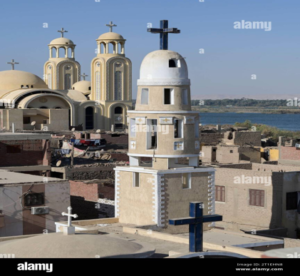
Bassil gives the following account: Two views are given afterwards. Some say that the journey ended at Kuskam which is 8 miles to the west of Kussia, and the second view says that the Holy Family proceeded to Assuit and there they lived in a cave in Assiut Mountain about 10 kms from Assuit City which is 48 kms from Kussia. Kuskam is 8 miles to the west of Kussia, the tradition says that the said room is now a Chapel in the Monastery of St. Mary, – Dair El Moahharak. Pilgrims by multitude of people, some 200,000 come from all districts of Egypt and especially from Abyssinia flock there to pay a pilgrimage to the holy room, now the chapel of the old Church by reason of the signs and wonders which have been manifested there and also in the hope to be blessed or healed from their illness. Church is considered oldest Church in the whole world. It is said to have been built around the year 70 A.D. present Church may be assigned to the 12th century. The said church is used for daily services of the Divine Liturgy from 3.00 a.m. up to seven daily.
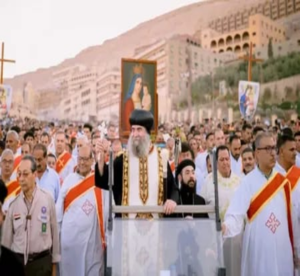
The great festival – the Mulid of Virgin Mary– is held every year in June and lasts for fifteen days, to celebrate the commemoration of the Flight into Egypt. Thousands of tents are pitched in the space in front of the Monastery, all of them pray in the Holy Church. Syrian Orthodox Church Tradition: In the Syrian Orthodox Church tradition, one of the stories connected with the flight of the Holy Family from Nazareth to Egypt relates to Virgin Mariam and a farmer sowing seeds in his field. The incident has been elevated to a feast in devotion to her. The story is that while on flight, followed by soldiers of Herod the King, the Holy Family reached a village where they saw a farmer sowing seeds in his field. Seeing the farmer, Virgin Mariam halted and told him of their plight. She also told him that if the King’s soldiers came and made enquiries about having seen them, he might tell them that he saw them passing by while sowing. Thereafter the Holy Family moved on. As expected, the soldiers in pursuit of the Holy Family arrived in the village and made enquiries about it. They met the farmers, interrogated him. They informed them as the Virgin had advised. The soldiers looked at the field and found a crop grown to full size ripe with grains fit for harvesting.
Computing the time required for a seed to grow to maturity, they concluded that it was futile to pursue and catch up with the Holy Family and consequently gave up the chase. The Church tradition points out that it was because of the prayers of Blessed Virgin Mariam that the seeds quickly sprouted and the crop grew into mature size within a short time which made the soldiers give up the pursuit, helped the Holy Family escape from their hands. In memory of this event, the Church in Syria and India observe two feasts annually – one on January 15 for the blessing of seeds for their quick sprouting and the other on May 15 for healthy growth of stalks of the crop and a bountiful harvest.
Blessed Virgin Mary spent her time Day and night in prayer.
The Most Holy Theotokos went often to the Holy Sepulcher of the Lord, and here she offered up fervent prayer.
Her fame as the Mother of God had already spread throughout the land and had aroused many of the envious and the spiteful against Her.
They made attempts on Her life; but God preserved Her from enemies.
Journey of the Holy Family in Egypt – A Sacred Timeline (Coptic Church Tradition)
1. Al-Farma: From Bethlehem to Gaza to the Zaraneeq reserve, the Holy Family entered Egypt through Al-Farma.
2. Tal Basta: Near Zagazig, the people mistreated them, so the Holy Family left.
3. The Mahmah (Mostorod): Here the Virgin bathed Christ and washed His clothes at a spring still present today.
4. Belbeis: A resting place with the Virgin Mary Tree. The Holy Family also passed it on their return journey.
5. Samanoud: Welcomed warmly by the people. A granite slab and well remain as relics of the visit.
6. Sakha: Notable for Al-Maghatas Monastery, blessed by Christ’s presence.
7. Wadi El-Natrun: The Holy Family crossed the Rosetta branch of the Nile, blessing the valley now home to ancient monasteries.
8. Matariya: Here, Christ raised a spring of water and the family sheltered under the “Tree of Mary.”
9. Coptic Cairo: The family visited this area briefly; many churches later commemorated their stay.
10. Maadi: Their crossing point to Upper Egypt via the Nile. The original ladder remains preserved.
11. Maghagha (Dir Al-Jarnous): The Holy Family drank from a well that still exists today.
12. Bahnasa: They passed through the area now called Sandafa near Bani Mazar in Minya.
13. Samalout (Jabal Al-Tair): The Holy Family settled in a cave on Mount Al-Tair, now within a Church.
14. Ashmonin: They crossed the Nile again and blessed this town and its people.
15. Dayrout: Part of Assiut Governorate, one of the stops in their journey southward.
16. Qusqam (Al-Qusiya): The people drove the Holy Family away. Today it is the site of the Muharraq Monastery.
17. Mir: The people received them kindly, and Christ blessed them in return.
18. Muharraq Monastery: They stayed 6 months and 10 days. The cave is considered the first church in history.
19. Drunka Mount: The last stop where the angel instructed St. Joseph to return to Palestine.
20. Return to Palestine: The Holy Family journeyed back through Egypt, Sinai, and settled in Nazareth.
…….to be continued
0 Comments