Sunday of Monks (Sunday Before Pentecost)
“You have made us for yourself, O Lord, and our hearts are restless until they rest in you”.
The Church Fathers, who were monks and ancient influential Christian theologians and writers led the primitive and early Church after the apostles. They were the backbone of our Church who established the intellectual and doctrinal foundations of Christianity. There are both monks and nuns in Orthodoxy, and monasticism has traditionally played a very important role in the life of the Orthodox Church.
The Sunday before Pentecost, (Saturday, in Most Oriental Orthodox Churches) we remember our ancestors, that the Holy Spirit may visit and comfort those that have fallen asleep. At Pentecost itself, called Trinity Sunday, after the Liturgy, we have the Kneeling Prayers, with the special prayers when we call on the Holy Spirit for ourselves and for the departed.
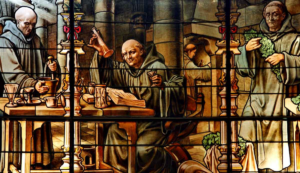
Monasticism constitutes the backbone of Orthodox Christianity expressing its identity, internal strength, and organization. “Living alone with God, as his only companion“
Pentecost (Acts 2: 1–3), is reminiscent of our Lord’s Supper; the disciples are together in the same house for what proves to be an important event. The Last Supper witness the end of the Messiah’s earthly ministry as He asks His disciples to remember Him after His death until He returns. At Pentecost, the disciples witness the birth of the New Testament Church in the coming of the Holy Spirit to indwell all believers. Thus, the scene of the disciples in the Upper Room at Pentecost links the commencement of the Holy Spirit’s work in the Church with the conclusion of Christ’s earthly ministry in the upper room before the crucifixion.
Asceticism and monasticism are two religious disciplines designed to de-emphasize the pleasures of the world so the practitioner can concentrate on the spiritual life. Both asceticism and monasticism have been adopted by worshipers of various faiths. In general, asceticism is the practice of strict self-denial as a means of attaining a higher spiritual plane. Monasticism is the state of being secluded from the world in order to fulfil religious vows. While most monks are ascetic, ascetics do not have to be monks.
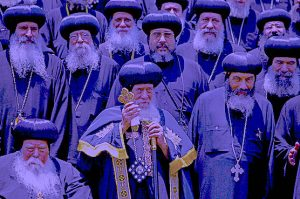
Asceticism comes from the Greek word askesis, meaning “exercise, training, practice.” Ascetics renounce worldly pleasures that distract from spiritual growth and enlightenment and live a life of abstinence, austerity and extreme self-denial. Asceticism is common in Hinduism, Jainism, Buddhism, Judaism, and Islam. Asceticism is not to be confused with Stoicism. Stoics believed that holiness can reside only in the spiritual realm, and all physical matter is evil. Ascetics do not necessarily believe that the flesh is evil, but they do go to great lengths to deny the flesh in order to transform the mind or “free” the spirit. Historically, asceticism has involved fasting, exposing oneself to heat or cold, sleep deprivation, flagellation, and even self-mutilation. Asceticism is usually associated with monks, priests and yogis.
The voluntary Nazarite vow could be seen as a mild form of asceticism. People of the Old Testament who took the vow consecrated themselves to God and refrained from drinking wine and cutting their hair (Num. 6: 1-21). Modern Christian ascetics use passages such as 1 Pet 2: 11 and 1 Cor. 9:27 to support their lifestyle, and they exhibit their austerity in different ways. Some choose to be celibate. Others practice religious disciplines such as meditation, keeping vigil, and fasting.
Monasticism is similar to asceticism, but with a slightly different focus. Whereas ascetics practice extreme self-denial, monks seclude themselves from all earthly influences in an attempt to live a godly life and to keep their personal religious vows. Christian monasticism is based on an extreme interpretation of Jesus’ teachings on perfection (Matthew 5: 48), celibacy (Matt. 19: 10-12), and poverty (Matt. 19: 16 -22). Monks and nuns attempt to control their environment and surround themselves with like-minded devotees. Many followers of Eastern religions also practice monasticism, the Buddhist monk perhaps being the most recognizable.
Christian monasticism draws from the influence of Judaic tradition. The Essenes, a Jewish mystical sect, were similar to monks. They were as devout as the Pharisees but lived in isolation, often in caves in the wilderness. It’s possible that John the Baptist was an Essene, and many scholars believe the Dead Sea Scrolls were written by Essenes. Monasticism in Christianity became popular during the time of Constantine. With the government’s endorsement of Christianity, many believers found it more difficult to live a godly lifestyle. Some of them turned their backs on society and fled to the desert, where they believed that quietude and self-induced hardship would make following Jesus easier. Today, most Western monks and nuns are Catholic, although there is a movement among Protestants for individuals and families to live communally.
Followers of Christ are told to deny self (Lk 9: 23), but asceticism takes this command to an extreme. The Bible never suggests that a Christian should purposely seek out discomfort or pain. On the contrary, God has richly blessed us “with everything for our enjoyment” (1 Tim. 6: 17). The Bible warns of those who “forbid people to marry and order them to abstain from certain foods” (1 Tim 4: 3); thus, it is erroneous to believe that celibates who abstain from certain foods are “more holy” than other people. We are under grace, not under the law (Rom 6: 14); therefore, the Christian does not live by a set of rules but by the leading of the Holy Spirit. Christ has set us free (Jn 8: 36). In many cases, the ascetic practices self-denial in order to earn God’s favor or somehow purge himself from sin. This shows a misunderstanding of grace; no amount of austerity can earn salvation or merit God’s love (Eph. 2: 8 -9) .
Monasticism is not biblical in that it ignores our responsibility to go into all the world and preach the gospel (Matt 28: 19). While we are not part of the world, we are in it, and the church was never intended to be isolated from people in need of Christ (1 Cor 5:9-10).
A Christian monk is to be an instrument of God’s work.
These people considered themselves Christians selected to live the life of angels (Matt. 22:30). They lived by themselves or in special houses as a community. At about the middle of the third century, they began fleeing the world and going to the desert, where they established permanent habitations, whether by themselves or in small groups. They are known as the “anchorites” (from anachoresis: departure, flight); the hermits (from eremos: desert); and the monastics (from monos: alone, for a monastic “lives in the presence of God alone”).
Also on Pentecost Sunday, in a symbolically powerful gesture once again declaring that the monks had not died in vain, but rather for life, for love, and for reconciliation.
0 Comments